

Keith Graves spent 29 years in law enforcement, and when he retired to a new state, he had no idea what the journey ahead would be like. It started when he walked into his new church, thinking he would volunteer as a greeter. When he asked a pastor, he said, “You look like a guy that carries concealed.” Graves admitted that he did without mentioning his law enforcement background.
“You would fit on our security team,” the pastor told him. Graves tells me that “one sentence changed everything.” He expected a few basic rules and some volunteer shifts, but instead found a gap between intention and execution.
Graves was already traveling the globe as an expert in narcotics investigations, so he did what he always did with a new assignment. He sought out training on church security, and he didn’t find much.
According to Graves, “Folks want to do the right thing. They want to protect their people. But they need training, structure, and a system that actually works.”
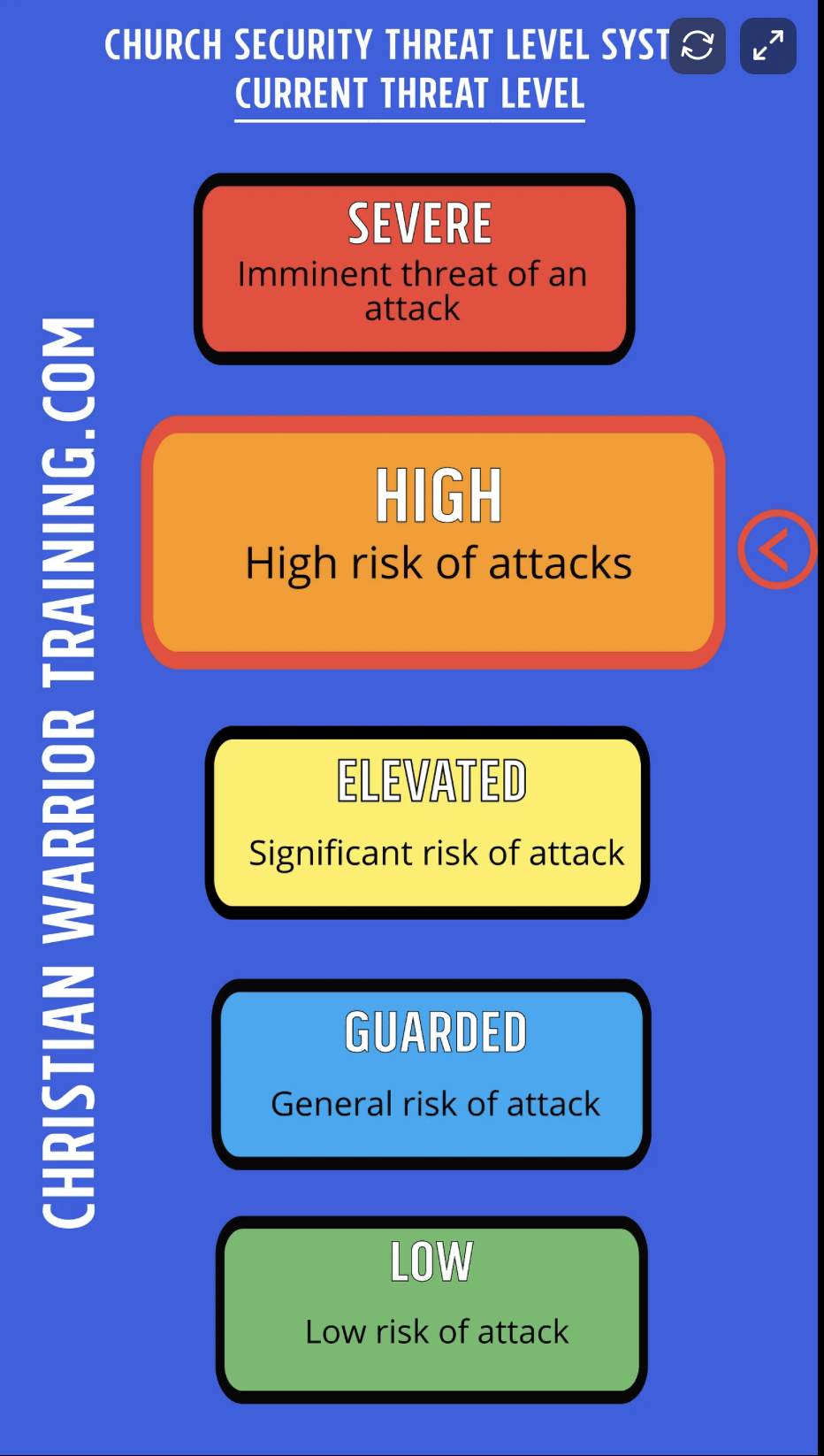
Graves’ website, Christian Warrior Training, is a one-stop shop for all things church security, including free training, but it has become so much more.
Graves shares weekly reports on crimes occurring at church, and he routinely warns his followers of the dangers he gleaned from intelligence across the globe.
The training gap and the simple fixes
Graves praised his security team, but he kept seeing the same problems: people eager to help without a clear pathway to competency. So his training pedigree kicked in, and he started recording short lessons—how to spot someone carrying, pre-attack indicators, surveillance signs, contact cover, and use-of-force basics.
Graves describes the training as “simple and basic,” but he would soon become the foremost expert in the field.
Graves started a newsletter and began sharing training videos. Within a month, his reach grew far beyond his church, and he had over 40,000 subscribers.
According to Graves, “The response blew past anything I expected because it was free, actionable training. When a church security team understands practical tactics and threat recognition, you remove panic and replace it with prepared action.”
Attacked For Truth
While you would think that federal law enforcement would be on the cutting edge of advising the church community of danger or the media would have an interest in letting the public know that terrorists are openly discussing attacks on Americans, you’d be wrong.
Graves stepped in, and he is often attacked for doing what no one else seems to care about.
As a Christian and 30-year law enforcement veteran, I could talk to Keith for hours, and I recently interviewed him on my podcast. Here are some of his thoughts on church security and leadership:
Security is a Ministry
Security at a church is not just tactics and tools. It is a ministry. Nehemiah rebuilt walls while holding a weapon in one hand and a trowel in the other. Ezra fed souls while caring for the community. You do both. You shepherd souls, and you protect them.
That means:
Training people to serve with compassion and competence.
Maintaining situational awareness while offering hospitality.
Balancing spiritual care with practical readiness.
The threat is real and rising
Active shooter incidents at houses of worship are trending up. This is not conjecture. It is observable across decades. From small rural churches to megachurches, violence has struck everywhere. Sulphur Springs, Uvalde, incidents at universities, and overseas attacks that target Christians all point to a broad and growing threat.
Extremist propaganda from groups that encourage attacks, social media influencers who normalize targeting religious gatherings, and lone wolf actors radicalized online combine to create a dangerous environment, especially around holidays when attendance spikes.
Why holidays matter
Christmas and Easter bring the people who only show up for the big services. Those crowds become soft targets. If you want to make a splash, attackers know precisely when to go for maximum victims and maximum publicity.
Intelligence matters. Someone must watch and analyze
Security teams cannot operate only on instinct. You need a simple intelligence function—a person who gathers reports, dials into local suspicious activity, reviews images, and digs into social media when someone looks off. Pre-attack surveillance is a real thing. It shows up in patterns of questions and behaviors. Treat those patterns like the red flags they are.
When a team in California discovered a man photographing a children’s area, digging a layer deeper into social media revealed connections to places and people that scream concern. Those are the moments intelligence pays for itself.
Do not outsource responsibility
Nobody is coming to save you. That is not disrespect for law enforcement. Keith describes himself as “blue to my bones,” but he says that you cannot wait for a perfect response. If the police do everything right, you will be grateful. If they are delayed or overwhelmed, who will stand? The security team will. Be ready.
That means equipping teams with how to:
Recognize pre-attack indicators and surveillance behavior.
Occupy and deny critical spaces if an attack begins.
Coordinate quickly with dispatched officers and provide clear, accurate information.
Use lawful force appropriately when necessary.
Recruit the right people and keep skills sharp
Former and current law enforcement bring experience, discipline, and a trained eye. They are not the only people who can protect a church, but they are uniquely qualified.
Get them involved.
Train constantly. I run through shoot houses, practice weapon handling, and drill scenarios, not because I want conflict, but because I refuse to lose a skill the Lord gave me. If you are legally authorized to carry, carry. If you are on a team, practice daily habits of awareness and weekly tactical drills.
Practical steps every church should take
Form a security ministry that pairs warrior readiness with pastoral care.
Create an intelligence slot—someone who tracks suspicious activity and analyzes threat indicators.
Standardize training on pre-attack indicators, evacuation, contact cover, and use of force basics.
Coordinate with law enforcement but do not depend on them exclusively.
Enforce legal carry rules where authorized and ensure members understand the law and policies.
Maintain situational awareness even during prayer and worship. Prayer with heads up does not mean lack of faith.
Drill holiday scenarios because Christmas and Easter drastically change risk profiles.
On leadership and accountability
Church leaders must stop treating security like an afterthought. Security ministries are extensions of pastoral care. Pastors who dismiss the need for trained teams misunderstand both the mission and the threat. Bad policies and inaction kill people. Good leadership prepares them.
Police leaders, too, must do what is right. Protect the public. Act selflessly. The system will not work if those responsible for public safety are distracted by politics or platitudes. The church does not ask for armed conflict. It asks for stewardship of the flock and practical steps to keep people safe.
A final word
We cannot let platitudes stand in for preparedness. Saying, “God will protect us,” while doing nothing is not faith. Noah did not stand on the shore and pray for the flood to go away. He built the ark. If God calls you to protect, use the gifts and training He has given you. Keep your skills sharp. Train your teams. Build intelligence. Love your congregation enough to prepare.
“You have a weapon in one hand and a trowel in the other.” Hold both.
If you serve on a church security team or want to start one, start today. Recruit the right people, build a simple intelligence process, and train as if lives depend on it.
Because they do.
You can follow Keith here, and you can watch my full interview with him below.
Dr. Travis Yates retired as a commander with a large municipal police department after 30 years of service. He is the author of “The Courageous Police Leader: A Survival Guide for Combating Cowards, Chaos & Lies.” His risk management and leadership seminars have been taught to thousands of professionals worldwide. He is a graduate of the FBI National Academy with a Doctorate Degree in Strategic Leadership and the CEO of the Courageous Police Leadership Alliance.


